
1 Feb 2017
540

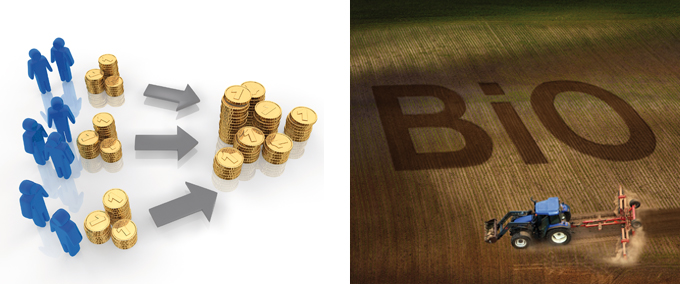
Many of us have reached the conclusion that choosing where and how we spend our money can create more political, social and economic impact than simply voting every four years. More and more of us are deciding to spend some of our precious time looking into the facts about what we buy. In a globalized world it is easy to feel impotent and confused because it is difficult to put a face on those who make the decisions that affect the lives of millions. Empowerment comes from being aware that through our small every day purchases we can express disagreement with the many injustices that are hidden behind a particular product name. The list of bad corporate practices includes: child and labour exploitation in under-developed Third World countries, having to make or handle substances that are toxic or dangerous to human health, polluting nature, abusing natural resources, mistreating animals, planned obsolescence, and the current epidemic of obesity and other illnesses.

We can ‘vote with our wallets’ by refusing to buy products from companies that are guilty of these bad practices, but first we must become aware of which products to avoid. Today’s pace of life keeps us ever more busy and hurried which drives us to actions that lack awareness or become automatic; like shopping quickly and mechanically at the supermarket or leaving the content of our meals in the hands of the food processing industry. The good news is that many people are making the decision to live their lives more consciously. Becoming a responsible consumer is an important part of the equation for those who choose a lifestyle based on enlightened awareness. For these people a choice such as eating organic food is no longer regarded as something based strictly on a personal concern about one’s own health. It becomes a global concern with far-reaching consequences.
The US journalist and author Michael Pollan is a strong proponent of eating at home and he says, “cooking is a political and revolutionary act”. It means going against conventional eating habits, recovering direct contact with food, becoming aware that a piece of meat belonged to a living animal and finding out if it was treated respectfully during its lifetime. It is also an act of love towards ourselves and whoever else will be nourished thanks to the time we spend in the kitchen. Here in Ibiza we can feel extremely fortunate in this regard, given the amount of options that we have to buy organic and km zero food. There are various agro-ecologic farms, markets and shops throughout the island which offer us the opportunity of choosing to consume local products. This means our cash stays right in the community that we live in... not in the pockets of distant food processors.
There is even more good news because those who feel the call to start walking the path of responsible consumerism have a growing number of tools available to find out what lies behind the products they are buying. Recently, two young Spanish journalists, Laura Villadiego and Nazaret Castro, have published a book entitled “Carro de combate. Consumir es un acto político” (a title which evokes the image of wielding your shopping trolley as a tool of politically active consumption). It is a complete buyer’s guide with 20 detailed reports that include everything we need to know about our most frequent purchases. They have also launched the website www.carrodecombate.com, where you can find many relevant reports and publications. Amongst them are: a listing of products that are made using child labour, the 12 most dangerous chemicals that are in the cosmetic products we use daily, everything that lies behind the industries of corn, palm oil, cotton and other textiles, and many articles about interesting alternatives and fair trade. Villadiego and Castro alert us to the fact that sugar is one of the products we should make a big effort to avoid buying. Not only because it is very detrimental to our health, but also because of the social impact and terrible working conditions that are part of that industry.
Another good source for obtaining information about what we buy is Greenpeace’s “Green electronics ranking”, which rates electronic products based on a list of criteria that includes: the source of energy used in production, the toxicity of materials, the life-span of the product and the origin of the minerals used in making the devices. This ranking can be found in Spanish, English, French or German on the various websites that the NGO has for each language. Additionally, in 2015 the second edition of the “Fairphone” was launched into the market – an interesting alternative made by a Dutch company that sells smartphones which are made following fair standards. All of the minerals used are ‘war zone free’ and the phone has a modular design which means it can be repaired over and over in the future with parts that are accessible, available and inexpensive. The price of the Fairphone 2 is €525 and it can be obtained through their website. Finally, another interesting source of information for responsible consumers is the recently-launched ethical comparison search engine called “Abouit”. This is an online platform created in Barcelona where you can find reports about over 400 products that have been analysed for their environmental, labour and health impact: http://www.abouit.eu/
As you can see, there are an increasing number of resources that allow us to know what lies behind our daily purchases. This gives us the opportunity to evaluate what level of commitment we want to make in using our purchasing to influence the world we live in. Businesses are undoubtedly aware that the number of consumers who question such things is growing steadily. That is why the choices each and every one of us exercises as we decide to spend our euros in one place or another, on one product or another, can have a great cumulative effect in shaping the world around us.
We can ‘vote with our wallets’ by refusing to buy products from companies that are guilty of these bad practices, but first we must become aware of which products to avoid. Today’s pace of life keeps us ever more busy and hurried which drives us to actions that lack awareness or become automatic; like shopping quickly and mechanically at the supermarket or leaving the content of our meals in the hands of the food processing industry. The good news is that many people are making the decision to live their lives more consciously. Becoming a responsible consumer is an important part of the equation for those who choose a lifestyle based on enlightened awareness. For these people a choice such as eating organic food is no longer regarded as something based strictly on a personal concern about one’s own health. It becomes a global concern with far-reaching consequences.
The US journalist and author Michael Pollan is a strong proponent of eating at home and he says, “cooking is a political and revolutionary act”. It means going against conventional eating habits, recovering direct contact with food, becoming aware that a piece of meat belonged to a living animal and finding out if it was treated respectfully during its lifetime. It is also an act of love towards ourselves and whoever else will be nourished thanks to the time we spend in the kitchen. Here in Ibiza we can feel extremely fortunate in this regard, given the amount of options that we have to buy organic and km zero food. There are various agro-ecologic farms, markets and shops throughout the island which offer us the opportunity of choosing to consume local products. This means our cash stays right in the community that we live in... not in the pockets of distant food processors.
There is even more good news because those who feel the call to start walking the path of responsible consumerism have a growing number of tools available to find out what lies behind the products they are buying. Recently, two young Spanish journalists, Laura Villadiego and Nazaret Castro, have published a book entitled “Carro de combate. Consumir es un acto político” (a title which evokes the image of wielding your shopping trolley as a tool of politically active consumption). It is a complete buyer’s guide with 20 detailed reports that include everything we need to know about our most frequent purchases. They have also launched the website www.carrodecombate.com, where you can find many relevant reports and publications. Amongst them are: a listing of products that are made using child labour, the 12 most dangerous chemicals that are in the cosmetic products we use daily, everything that lies behind the industries of corn, palm oil, cotton and other textiles, and many articles about interesting alternatives and fair trade. Villadiego and Castro alert us to the fact that sugar is one of the products we should make a big effort to avoid buying. Not only because it is very detrimental to our health, but also because of the social impact and terrible working conditions that are part of that industry.
Another good source for obtaining information about what we buy is Greenpeace’s “Green electronics ranking”, which rates electronic products based on a list of criteria that includes: the source of energy used in production, the toxicity of materials, the life-span of the product and the origin of the minerals used in making the devices. This ranking can be found in Spanish, English, French or German on the various websites that the NGO has for each language. Additionally, in 2015 the second edition of the “Fairphone” was launched into the market – an interesting alternative made by a Dutch company that sells smartphones which are made following fair standards. All of the minerals used are ‘war zone free’ and the phone has a modular design which means it can be repaired over and over in the future with parts that are accessible, available and inexpensive. The price of the Fairphone 2 is €525 and it can be obtained through their website. Finally, another interesting source of information for responsible consumers is the recently-launched ethical comparison search engine called “Abouit”. This is an online platform created in Barcelona where you can find reports about over 400 products that have been analysed for their environmental, labour and health impact: http://www.abouit.eu/
As you can see, there are an increasing number of resources that allow us to know what lies behind our daily purchases. This gives us the opportunity to evaluate what level of commitment we want to make in using our purchasing to influence the world we live in. Businesses are undoubtedly aware that the number of consumers who question such things is growing steadily. That is why the choices each and every one of us exercises as we decide to spend our euros in one place or another, on one product or another, can have a great cumulative effect in shaping the world around us.
Looking for a property in Ibiza or Formentera?
Let our AI assistant help you find your perfect property in Ibiza
Suggested Articles
1
 2
3
4
5
6
2
3
4
5
6
Ibiza Optimista
Sponge Cities
December 2025 – February 2026
·1938 views
Ibiza Optimista
Possible Alternative to LASIK Eye Surgery
December 2025 – February 2026
·1601 views
Ibiza Optimista
Cleaning Lakes Ecologically
December 2025 – February 2026
·1574 views
Ibiza Optimista
Bridge to Connect Sicily and Mainland Italy
December 2025 – February 2026
·1542 views
Ibiza Optimista
Our Cells Can Listen
December 2025 – February 2026
·1444 views
Ibiza Optimista
Ibiza’s Farmers Celebrate the Rains
December 2025 – February 2026
·1444 views