
1 Feb 2019
658

How did human civilization really begin? Are we to believe the old story that we were taught in school, or is there a much more mysterious and fascinating history of humanity still to be discovered?
Conventional archaeologists say that the first civilizations arose about 5,200 years ago (3,200 BCE), in the ‘Fertile Crescent’ of the Tigris-Euphrates river valley of what is today Iraq. The most notable early society was called Sumer, and it later gave way to the great Egyptian dynasties that are supposed to have built the pyramids. This has been the ‘conventional wisdom’ for over 150 years, but scholars on the leading edge are showing us that it does not stand up to scrutiny. With each new discovery it becomes more and more likely that there was an advanced society long before Sumer... and perhaps the knowledge of this earlier civilization was passed down to the Sumerians, the Egyptians, and various other civilizations that sprung up around the world. This theory is supported by many pieces of evidence, and some of the most striking involve the Great Pyramid in Giza, the Sphinx and some strangely accurate ancient maps.
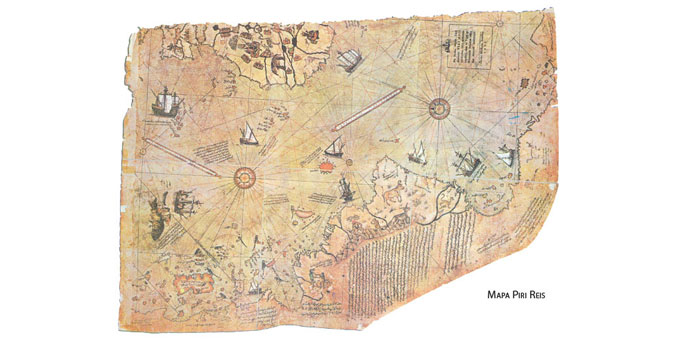 In 1536 a map of the world was drawn for the Turkish navy. It was called the Piri Reis Map, and it was put together using several ancient maps that were found in the archives of the Ottoman Empire.
What makes this map so remarkable is that it accurately shows parts of the world that had not yet been discovered – including Antarctica, which was completely unknown until 300 years later. That is incredible... but even more amazing is the fact that the map shows the coastline of Antarctica as it looks underneath the ice! How is that possible, since it is only in the last 50 years that modern technology has been able to see what that coastline looks like under the ice.
This map strongly suggests that there must have been people who knew of the existence of Antarctica long before it was ‘discovered’, and that apparently there was no ice there at the time. We have a rough idea of when that was because geologic studies have proven that Antarctica was in fact free of ice around 10,000 - 12,000 years ago. It certainly appears that dating the beginning of civilization at only 5,000 years ago cannot be correct, because the Antarctic coastlines on this map must have been surveyed at least 10,000 years ago. Yet conventional science refuses to acknowledge this ‘forbidden history’ – even when it stares them directly in the face – as it does in Egypt.
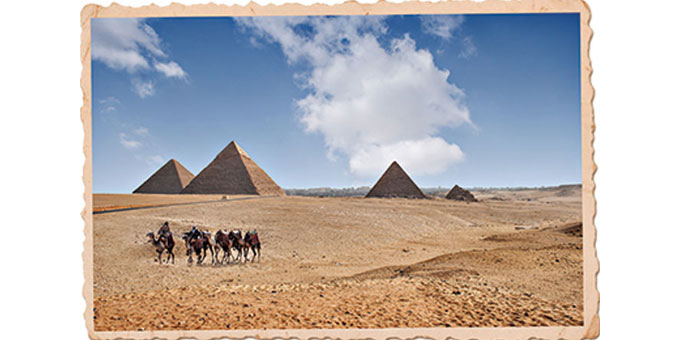 According to most Egyptologists, the Great Pyramid of Giza was built 4,600 years ago, and was completed in only 20 years. The first western archaeologists to study the pyramids came up with this theory back in the 1800’s... and they have stuck with it ever since... despite the seeming impossibility of what they claim. Let’s look at the facts: The Great Pyramid at Giza is an absolute miracle in its architecture, masonry, construction, mathematics, and astronomy. The dimensions and measurements are incredibly precise and comparable to the accuracy of modern laser technology.
It is well documented that 4,600 years ago (when this pyramid was supposed to have been built) the Egyptians only had primitive copper tools, and no equipment for lifting large objects. How could they have possibly built this incredible structure that includes 2.5 million giant stones – each stone weighing over two tons and some as much as 40 tons. Even with today’s technology it would be very difficult to move and place these stones. On top of that, the stones were quarried many kilometres from the site. How did they move so many giant stones so far? How were they able to cut them with such precision that they fit together seamlessly? All of these questions remain unanswered... yet we continue to be told that they did all of this with ropes made of vines... and simple copper tools.
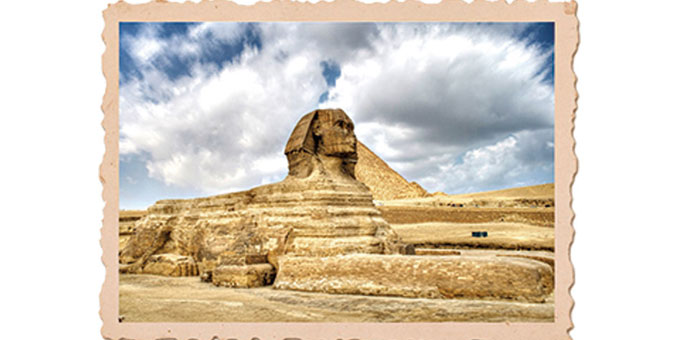 More evidence that there must have been a much older advanced civilization that built the Great Pyramid comes from its famous neighbour the Sphinx. Once again, the ‘experts’ tell us that this giant structure was created less than 5,000 years ago, but famed Egyptologist John Anthony West says that this cannot be possible. His conclusion is based on the weathering marks on the limestone rock that the Sphinx was carved out of. Geologists agree that this erosion could only be the result of prolonged rainfall – yet the weather in this part of Egypt has been extremely dry for over 5,000 years. Weather studies show that the Sphinx has to be between 9,000 and 12,000 years old – because that was the last time that the climate in Egypt was wet enough to cause the erosion in the limestone.
The newest evidence of an earlier advanced culture is being uncovered every day by excavations at an archaeological site in Turkey called Göbekli Tepe. These are the massive ruins of a large complex that was apparently devoted to ceremonies and worship. Its structures are at least 11,600 years old, and yet they show advanced architecture and construction. According to mainstream archaeologists, a civilisation capable of creating the architecture and art discovered at Göbekli Tepe is not supposed to have existed 11,600 years ago... yet it apparently did. So what is the explanation?
 The answer to that question just might be found in the ancient stories that have been passed down to us through the centuries. Most cultures have a founding myth of a pre-existing golden age that was wiped out by a global disaster. In the Bible that myth is the story of Noah and the flood. In ancient Greece it was Plato’s writings about the great civilization of Atlantis which was also lost in a catastrophic flood.
There are over 400 of these flood/disaster myths in cultures throughout the world. Are they just stories, or do they echo humanity’s dimly remembered history of its origins?
The fact that so many cultures, in all different parts of the world, have basically the same story would seem to be much more than a coincidence. Could it be that there truly was an advanced society which was devastated by a global catastrophe, and that the scattered survivors of that civilization helped to develop cultures like Sumer and Egypt? Conventional archaeologists ignore this possibility, but there is new geological evidence that supports it. The Ice Age ended about 12,000 years ago, and scientists have recently determined that it is highly likely that the earth was hit by giant meteors at that time. This would have made the ice melt very quickly, and sea levels would have risen drastically, thus causing the very floods that so many cultures speak of. The rising seas would also explain the remains of ancient cities that have been found underwater in various places around the world.
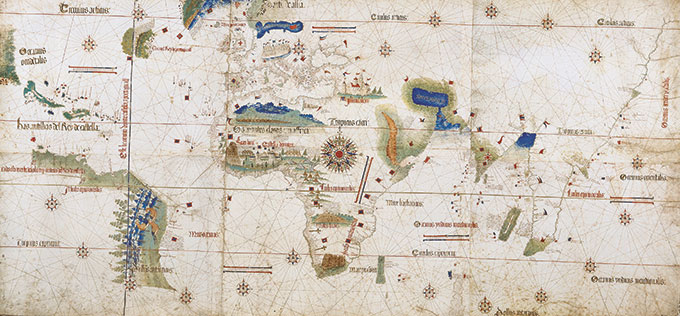 As the evidence continues to mount, it becomes clear that the conventional story of how civilization started is inaccurate and outdated. So what is the truth? One theory is supported by Graham Hancock – the author of ‘Fingerprints of the Gods’ and several other books on this topic. He has been researching this in depth for over 20 years, and now believes that: “Göbekli Tepe is one of the places where the survivors of a lost civilisation settled after the giant flood that is remembered in myths throughout the world. References to these survivors can be found in various cultures – they are described as sages, magicians or mystery teachers. Their mission was to impart their ancient knowledge to the other remaining humans.”
This is an interesting theory, but at this point we can only guess as to where the exploration of our past may eventually lead. The discovery of the ascent of humanity is a fascinating adventure... and as the true story gradually comes to light we will get a clearer sense of who we are and where we came from... and perhaps where we are headed.
Conventional archaeologists say that the first civilizations arose about 5,200 years ago (3,200 BCE), in the ‘Fertile Crescent’ of the Tigris-Euphrates river valley of what is today Iraq. The most notable early society was called Sumer, and it later gave way to the great Egyptian dynasties that are supposed to have built the pyramids. This has been the ‘conventional wisdom’ for over 150 years, but scholars on the leading edge are showing us that it does not stand up to scrutiny. With each new discovery it becomes more and more likely that there was an advanced society long before Sumer... and perhaps the knowledge of this earlier civilization was passed down to the Sumerians, the Egyptians, and various other civilizations that sprung up around the world. This theory is supported by many pieces of evidence, and some of the most striking involve the Great Pyramid in Giza, the Sphinx and some strangely accurate ancient maps.
What makes this map so remarkable is that it accurately shows parts of the world that had not yet been discovered – including Antarctica, which was completely unknown until 300 years later. That is incredible... but even more amazing is the fact that the map shows the coastline of Antarctica as it looks underneath the ice! How is that possible, since it is only in the last 50 years that modern technology has been able to see what that coastline looks like under the ice.
This map strongly suggests that there must have been people who knew of the existence of Antarctica long before it was ‘discovered’, and that apparently there was no ice there at the time. We have a rough idea of when that was because geologic studies have proven that Antarctica was in fact free of ice around 10,000 - 12,000 years ago. It certainly appears that dating the beginning of civilization at only 5,000 years ago cannot be correct, because the Antarctic coastlines on this map must have been surveyed at least 10,000 years ago. Yet conventional science refuses to acknowledge this ‘forbidden history’ – even when it stares them directly in the face – as it does in Egypt.
It is well documented that 4,600 years ago (when this pyramid was supposed to have been built) the Egyptians only had primitive copper tools, and no equipment for lifting large objects. How could they have possibly built this incredible structure that includes 2.5 million giant stones – each stone weighing over two tons and some as much as 40 tons. Even with today’s technology it would be very difficult to move and place these stones. On top of that, the stones were quarried many kilometres from the site. How did they move so many giant stones so far? How were they able to cut them with such precision that they fit together seamlessly? All of these questions remain unanswered... yet we continue to be told that they did all of this with ropes made of vines... and simple copper tools.
The newest evidence of an earlier advanced culture is being uncovered every day by excavations at an archaeological site in Turkey called Göbekli Tepe. These are the massive ruins of a large complex that was apparently devoted to ceremonies and worship. Its structures are at least 11,600 years old, and yet they show advanced architecture and construction. According to mainstream archaeologists, a civilisation capable of creating the architecture and art discovered at Göbekli Tepe is not supposed to have existed 11,600 years ago... yet it apparently did. So what is the explanation?
There are over 400 of these flood/disaster myths in cultures throughout the world. Are they just stories, or do they echo humanity’s dimly remembered history of its origins?
The fact that so many cultures, in all different parts of the world, have basically the same story would seem to be much more than a coincidence. Could it be that there truly was an advanced society which was devastated by a global catastrophe, and that the scattered survivors of that civilization helped to develop cultures like Sumer and Egypt? Conventional archaeologists ignore this possibility, but there is new geological evidence that supports it. The Ice Age ended about 12,000 years ago, and scientists have recently determined that it is highly likely that the earth was hit by giant meteors at that time. This would have made the ice melt very quickly, and sea levels would have risen drastically, thus causing the very floods that so many cultures speak of. The rising seas would also explain the remains of ancient cities that have been found underwater in various places around the world.
This is an interesting theory, but at this point we can only guess as to where the exploration of our past may eventually lead. The discovery of the ascent of humanity is a fascinating adventure... and as the true story gradually comes to light we will get a clearer sense of who we are and where we came from... and perhaps where we are headed.
Looking for a property in Ibiza or Formentera?
Let our AI assistant help you find your perfect property in Ibiza
Suggested Articles
1
 2
3
4
5
6
2
3
4
5
6
Ibiza Optimista
Sponge Cities
December 2025 – February 2026
·1938 views
Ibiza Optimista
Possible Alternative to LASIK Eye Surgery
December 2025 – February 2026
·1602 views
Ibiza Optimista
Cleaning Lakes Ecologically
December 2025 – February 2026
·1574 views
Ibiza Optimista
Bridge to Connect Sicily and Mainland Italy
December 2025 – February 2026
·1543 views
Ibiza Optimista
Our Cells Can Listen
December 2025 – February 2026
·1445 views
Ibiza Optimista
Ibiza’s Farmers Celebrate the Rains
December 2025 – February 2026
·1445 views