This website uses our own cookies to collect information in order to improve our services, and to analyse users’ browsing habits. Your continued use of this website constitutes acceptance of the installation of these cookies. The user has the option of configuring their browser in order to prevent cookies from being installed on their hard drive, although they must keep in mind that doing so may cause difficulties in their use of the webpage.
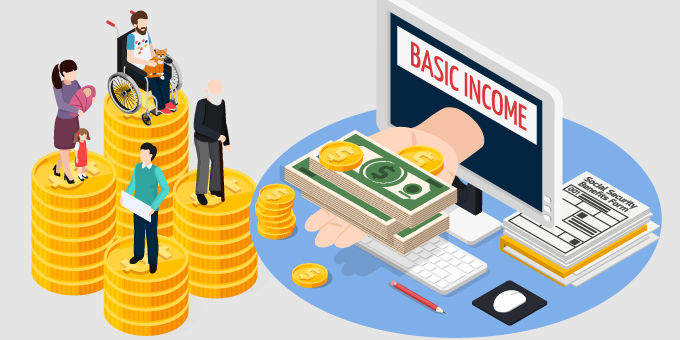
How would you like to live in a society that gives every citizen a guaranteed minimum income for their entire adult life? This is the essence of what is called Universal Basic Income (UBI), and it is a hot topic among western economists and governments. Andrew Yang, who ran for President of the United States in 2020, made UBI the basis of his campaign, and Dutch economist Rutger Bregman has spread the gospel of UBI around the world. Those who favour this concept say that it is the best way to reduce income inequality and provide for those who are in need. They also claim that UBI is much more efficient than current systems and that it will greatly benefit the economy. On the other side are the sceptics who fear that it is too costly and would provide a serious disincentive for people to work. So what would a typical UBI system look like, and how would it fit within a modern western economy? A workable system would have to be just what it says in the name: ‘Universal’ and ‘Basic’. ‘Universal’ means that every citizen has the right to start getting their monthly payment the day they turn 21, and they will continue receiving it for the rest of their life. The money is not taxable and is not conditional - everyone gets it no matter if they are rich or poor, working or not working. ‘Basic’ means that the amount of the monthly payment needs to be just enough to live a simple life, because if it is too much then many people might decide not to work. Finland has considered a proposal for €800 per month, and that seems about right (with adjustments for inflation each year).
Has the time for a Universal Basic Income arrived?
The first question that comes to mind is whether we can afford to do this, and several economic studies say that the answer is yes. The main reason is that the UBI would take the place of all existing government welfare, support and retirement payments. In most western countries the total of all of those payments adds up to more than the cost of an €800 per month UBI. In addition, the government would save the huge expense of the bureaucracy that runs their current social safety net system - retirement, unemployment, welfare, disability, etc. All of these would be covered by the UBI which can be managed in one simplified system that would be inexpensive and easy to administer.
The other obvious question is whether this system would discourage people from working. After all, if people have enough to get by without doing anything then why should they take a job? Again, the key words are ‘get by’, because the UBI only gives you enough to lead a very spartan existence. If you want to have more material comforts in your life then you will need to go out and earn more money. Many economists feel that it is actually the existing welfare systems that discourage working, and that UBI would be better in that regard. Social programmes like unemployment insurance and welfare can negate the incentive to work, because recipients might lose some of their benefits if they start to earn money. This creates situations where it is better for some people not to work at all, rather than lose their benefits. The UBI does not have this problem, because everyone will continue to get the same amount no matter whether they work or not - so there is absolutely no disincentive to getting a job and earning additional money. The UBI would also give people in the labour market more bargaining power - particularly at the lower end of the income scale. If you are able live a simple life without working, then the boss’ power over you is vastly reduced. You are not so desperate that you have to take a job with low wages and poor working conditions just to put a roof over your head and food on the table. Another positive effect of a UBI system is that the people who are most in need would be able to get help without sacrificing their dignity. Replacing the current benefits systems would eliminate the degrading experiences of intrusive testing of eligibility, waiting in long lines to deal with over-worked staff, being forced to apply for the lowest paid jobs, etc.. In addition, the problem of people cheating the system by fraud would disappear because the bureaucracy of the welfare system would be swept away. There would be no system to cheat because everyone would always be paid the same amount.
Promoting personal freedom and ending poverty
It’s easy to understand why providing UBI would be much more equitable and efficient than our current welfare systems, but what effect would it have on the overall economy? Most experts feel that a UBI would stimulate economic growth based on what they call the ‘multiplier effect’. Very simply stated, it means that every euro that is spent on goods and services continues to circulate in the economy, so that it actually produces more than double its original amount in economic value. Based on that principle a UBI would give the economy a big boost because it would help to redistribute income to people who will actually spend the money they receive on necessities - and this puts that money to work in the economy. There certainly seems to be a lot to like about the UBI. It has the potential to shrink the size of government, reduce inequality and finally put an end to poverty. Clearly it would help the working poor, single parents, and the homeless, but the potential advantages are not limited to just those in need. Think about a person who has decided that their passion is to be an artist, therapist, writer or other calling that is not immediately remunerative. They face a very difficult decision of whether to give up on their dreams and get a conventional job, or take the risk of being extremely poor. With UBI they would have enough to support themselves until they got their career going... or found a new one. And this element of freedom does not just apply to the struggling artist. Having the UBI as a safety net gives everyone the opportunity to take time out from their employment... to reassess their life... without the fear of financial collapse. So should we abolish our entire welfare system and just give every citizen enough to scrape by each month? What do you think?.
Looking for a property in Ibiza or Formentera?
Let our AI assistant help you find your perfect property in Ibiza






 2
2