This website uses our own cookies to collect information in order to improve our services, and to analyse users’ browsing habits. Your continued use of this website constitutes acceptance of the installation of these cookies. The user has the option of configuring their browser in order to prevent cookies from being installed on their hard drive, although they must keep in mind that doing so may cause difficulties in their use of the webpage.
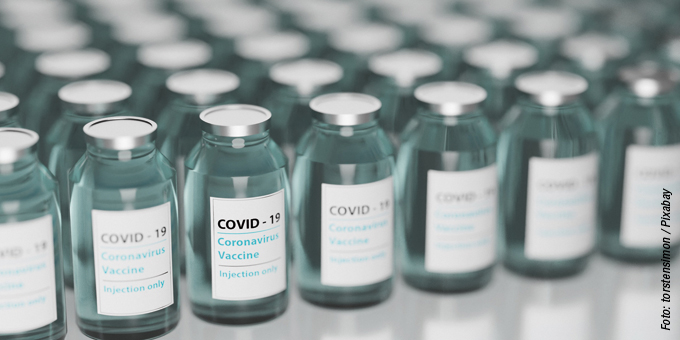
The policies and restrictions instituted as a reaction to Covid-19 have disrupted our lives in many ways – economically, emotionally, and physically. We all want to return to normal living, and most people feel that a safe and effective vaccine is the best way for us to accomplish this. In order for that to work a large percentage of the population needs to take the vaccine. However, polls show that the attitude of the public toward being vaccinated for Covid-19 is a spectrum of opinions with polar extremes. On one end you have people who completely trust the government and the medical establishment. They will enthusiastically line up to be injected with the vaccine. On the other end are those who will strongly resist taking a vaccine which they feel may be dangerous to their health and/or unnecessary. Many people fall somewhere in the middle of these two extremes. They are not against all vaccines, but want to wait and see if the Covid vaccine is completely safe before taking it. In Spain and most of the West, the breakdown is approximately: 45%“Yes I’ll take it!” 40%“Probably OK but later” 15%“No way!” (these percentages vary over time and from country to country)
Could herd immunity bring our lives back to normal?
Health officials say that about 75% of the population needs to be vaccinated in order to create ‘Herd Immunity’. This basically means that when enough people are immune to an infectious disease (by vaccination or otherwise) then the entire population will be protected - even those who are not vaccinated. Vaccination is not mandatory, so each person needs to make their own decision. Let’s look at some facts about vaccines that can help us to make that choice.
How vaccines work
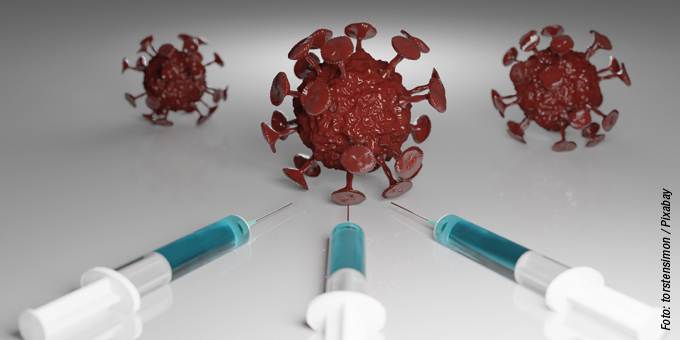
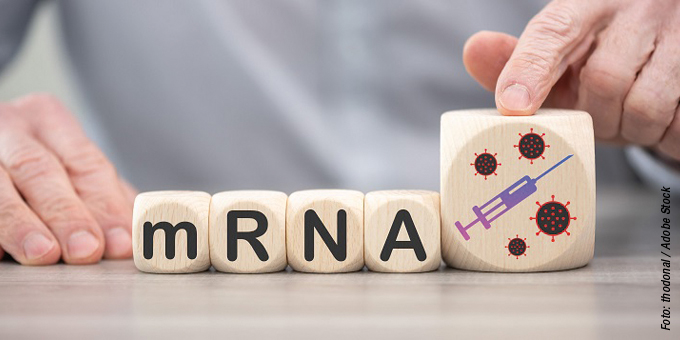
Vaccines are based on the ancient practice of teaching the body to protect itself by exposing it to a small amount of what causes the disease. Primitive forms of immunisation included drinking snake venom to cure snake bites, and smearing an open wound with cowpox to confer immunity to smallpox. Vaccines were developed in the 20th century to stimulate your body’s natural defences in a safer and more scientific way. A vaccine makes your immune system feel that it is being attacked by the virus (more below on how different types of vaccines do this). In response to this apparent attack your immune system creates antibodies – proteins which are specifically designed to fight that virus. It also summons killer T-cells to help in wiping out the virus. Specialized memory T-cells “learn” to remember this virus, so that if you are exposed to it in the future, your immune system will know how to make the antibodies that will attack it. There are several types of modern vaccines that accomplish this goal, and all of them are being tested against Covid-19. The three traditional types of vaccines are: Live Attenuated, Inactivated and Subunit. Live Attenuated Vaccines inject the actual virus, but in a weakened state that does not cause illness except in very rare cases. Inactivated Vaccines inject a form of the virus that has no genetic material, so it cannot infect cells. Subunit vaccines inject only part of the virus (an antigen like the spike protein of Covid-19). All three of these trigger the immune system, but the response is generally strongest with the Attenuated vaccine, and weakest with the Subunit vaccine. These traditional vaccines have been used to control polio, measles and many other serious illnesses, but it generally takes at least three or four years to develop and test a new one. There was urgency to find a vaccine for Covid-19 more rapidly, and this led scientists to try of a newer method that could be produced faster. The first vaccines approved for Covid-19 were made by Pfizer and Moderna using ‘mRNA’ technology, and they were the first mRNA vaccines that were ever authorized for use in any disease. These vaccines are very different from the traditional ones. Rather than having all or part of the virus injected, the person receives only genetic molecules called ‘mRNA’. This term stands for ‘Messenger RNA’ which is what the body uses to instruct your DNA which proteins to create. These vaccines contain mRNA with instructions for constructing the spike proteins that are on the outside of the Covid-19 virus. When these genetic instructions are injected into your body they tell your cells to create Covid-19 spike proteins. Your immune system recognizes that these spike proteins are part of Covid-19, and it designs antibodies to protect against the virus. It is relatively easy and inexpensive to make large amounts of mRNA, so they were able to develop and test these vaccines in less than one year. The vaccines from AstraZeneca and Johnson & Johnson (J&J) also use mRNA technology but with a different delivery system. Pfizer and Moderna inject the mRNA by itself wrapped in a bubble of protective chemicals. AstraZeneca and J&J inject you with a deactivated virus (Not Covid) that contains DNA from the Covid Spike protein. This virus is designed so that it goes into your cells, but you do not get this underlying virus. It merely delivers the spike DNA to the nucleus of your cell. Your cell then produces mRNA which creates the spike proteins that attract the antibodies.
Testing
The testing process for vaccines begins by seeing how they work in lab animals and if this goes well then three phases of human testing begins. The first two phases use small groups to monitor safety and determine the ideal dose for the vaccine. Phase Three trials test thousands of people by comparing one group that has been vaccinated with another which only receives a placebo injection. Normally this phase can take from one to three years to complete, however this was done much more quickly for the Covid-19 vaccines. There is also a Phase Four that looks for long term reactions over a period of several years, and the drug companies say that they are continuing with this phase.
Questions remain
The Pfizer and Moderna vaccines were approved for use after Phase Three trials that involved a very large number of people, but were much shorter than normal. The preliminary results were good with over 90% effectiveness, and governments began giving these vaccines at the end of 2020. Questions remain over how long the protection will last and if there will be any long term side effects. Because this is the first time that mRNA technology has ever been authorized for a vaccine, there is no data from previous vaccines that can be used to help predict what will happen.
Are these mRNA vaccines the best answer to the Covid problem?
It is also not known for certain if people who take these vaccines may still be able to transmit the virus to others – despite being protected against the symptoms themselves. In addition, the virus has been making new variants, and we do not know if the current vaccines will completely protect us from these. All of this uncertainty is a consequence of the extremely rapid vaccine development process that has been used. Our governments decided that speed was of the essence given the great disruptions that this virus has caused. So the vaccines were given to the public before long term studies could answer these lingering questions.
Looking for a property in Ibiza or Formentera?
Let our AI assistant help you find your perfect property in Ibiza


 2
2