
8 Oct 2022
918

The way to develop strong muscles is to do physical exercises that strengthen your body. According to the latest research, it appears that meditation can do the same thing to develop more ‘power’ in your brain. Many studies have shown that mindful meditation can change your life by reducing stress and increasing your ability to focus. But now we have scientific proof that regular meditation actually changes the physical structure of your brain in very beneficial ways. On top of that, we are learning that you can tailor your meditation to produce those changes in the areas of your brain that will produce the results you desire. Let’s look first at the Harvard University study that used magnetic resonance imaging (MRI) to see if meditation has any effect on the structure of the brain.

The participants had spent an average of just 27 minutes per day practicing mindfulness meditation over a period of eight weeks. MRI scans of their brains had been taken two weeks prior to the beginning of the study, and taken again after the study was completed. The analysis of these images found significantly increased brain cell density in the parts of the brain that are associated with learning, memory, self-awareness, compassion and introspection. There was also a corresponding decrease in the density of the amygdala, which is the part of the brain that plays an important role in anxiety and stress. In summary, the areas of the brain devoted to positive functions got stronger, while the areas related to negative emotions got weaker... after only 27 minutes of meditating per day for just eight weeks.

The leader of the study was professor Sara Lazar of the Harvard Medical School who said: “Although the practice of meditation is associated with a sense of peacefulness and physical relaxation, practitioners have long claimed that it also provides more permanent cognitive and psychological benefits. This study demonstrates that changes in brain structure may underlie these improvements, and that people are not just feeling better because they are spending time relaxing.” Lazar went on to say, “It is fascinating to see the brain’s plasticity and that, by practicing meditation, we can play an active role in changing our brains to increase our well-being and quality of life.”
Building upon this is the latest research which suggests that the type of meditation that you practice will influence which parts of your brain are most affected. This is analogous to physical training where, if you want to build up one particular muscle group, there are special exercises that concentrate on developing that area of your body. Similarly, it appears that certain types of meditation are better for developing specific parts of your brain.
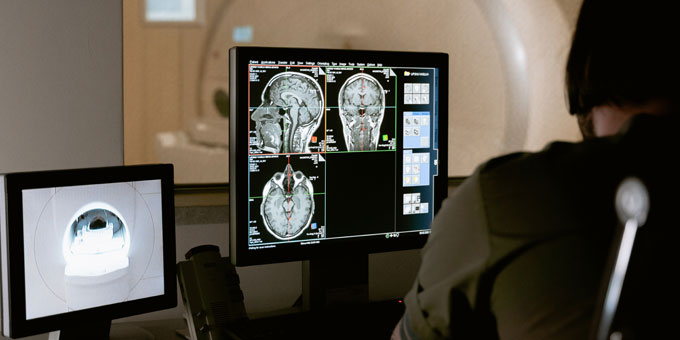
Researchers at the Max Planck Institute in Germany looked at the effects of three different meditation techniques over a nine month period. One technique was based on mindfulness meditation which taught people to direct their attention to the breath and body. A second type concentrated on compassion and emotional connections, while the third meditation encouraged people to think about issues from different points of view. MRI scans taken before and after each three month course showed that the parts of the brain involved in the specific skill that was being trained grew thicker in comparison with scans from a control group.

Mindfulness meditation increased thickness in the areas linked to attention, while compassion-based meditation increased the parts of the brain associated with bringing emotions into conscious awareness. The meditations that focused on using various perspectives boosted regions of the brain involved with problem solving. Tania Singer, the lead researcher on the study, says that meditation courses can now be better designed to target specific outcomes. She went on to say that: “We still have to see how these changes affect people in their everyday lives. If their actions and attitudes improve in relation to the areas of their brains that have increased in size, this could be an extremely significant breakthrough.”
The participants had spent an average of just 27 minutes per day practicing mindfulness meditation over a period of eight weeks. MRI scans of their brains had been taken two weeks prior to the beginning of the study, and taken again after the study was completed. The analysis of these images found significantly increased brain cell density in the parts of the brain that are associated with learning, memory, self-awareness, compassion and introspection. There was also a corresponding decrease in the density of the amygdala, which is the part of the brain that plays an important role in anxiety and stress. In summary, the areas of the brain devoted to positive functions got stronger, while the areas related to negative emotions got weaker... after only 27 minutes of meditating per day for just eight weeks.
The leader of the study was professor Sara Lazar of the Harvard Medical School who said: “Although the practice of meditation is associated with a sense of peacefulness and physical relaxation, practitioners have long claimed that it also provides more permanent cognitive and psychological benefits. This study demonstrates that changes in brain structure may underlie these improvements, and that people are not just feeling better because they are spending time relaxing.” Lazar went on to say, “It is fascinating to see the brain’s plasticity and that, by practicing meditation, we can play an active role in changing our brains to increase our well-being and quality of life.”
Building upon this is the latest research which suggests that the type of meditation that you practice will influence which parts of your brain are most affected. This is analogous to physical training where, if you want to build up one particular muscle group, there are special exercises that concentrate on developing that area of your body. Similarly, it appears that certain types of meditation are better for developing specific parts of your brain.
Researchers at the Max Planck Institute in Germany looked at the effects of three different meditation techniques over a nine month period. One technique was based on mindfulness meditation which taught people to direct their attention to the breath and body. A second type concentrated on compassion and emotional connections, while the third meditation encouraged people to think about issues from different points of view. MRI scans taken before and after each three month course showed that the parts of the brain involved in the specific skill that was being trained grew thicker in comparison with scans from a control group.
Mindfulness meditation increased thickness in the areas linked to attention, while compassion-based meditation increased the parts of the brain associated with bringing emotions into conscious awareness. The meditations that focused on using various perspectives boosted regions of the brain involved with problem solving. Tania Singer, the lead researcher on the study, says that meditation courses can now be better designed to target specific outcomes. She went on to say that: “We still have to see how these changes affect people in their everyday lives. If their actions and attitudes improve in relation to the areas of their brains that have increased in size, this could be an extremely significant breakthrough.”
Looking for a property in Ibiza or Formentera?
Let our AI assistant help you find your perfect property in Ibiza
Selling in Ibiza or Formentera?
List it free. We translate it into English, Spanish and German for international buyers.
Suggested Articles
1
 2
3
4
5
6
Health & Wellness
The Benefits of Yoga
December 2025 – February 2026
·1484 views
Health & Wellness
The Mystery of Consciousness
October - December 2025
·1338 views
Health & Wellness
Your Body’s Energy Centres
August - October 2025
·1387 views
Health & Wellness
The Art of Conscious Living
June - August 2025
·1372 views
Health & Wellness
The Science of Happiness
April - June 2025
·1328 views
Health & Wellness
Envision Your Life
April - June 2025
·1264 views